Showing posts with label hardy. Show all posts

Faking a Tropical Paradise


People in Southern California have been trying to delude themselves for over a century. Palm trees, sandy beaches, tropical flowers, lush lawns...the dirty truth is that we're not tropical, we're almost desert.


The area only looks a lush as it does because we import tons of water and splash it all over our yards in a desperate attempt to fool ourselves we're in Hawaii or some other island paradise.


In the summer, we get hot. Very hot. Our thermometer peaked at 117 last summer and regularly flirts, or goes steady, with 110. 

In the winter, we get cold and the temps can dip below freezing. 


One key factor in my garden plan is to keep plants that can tolerate a little cold so, other than our house plants and our lone phalaenopsis orchid, the tropical plants in my backyard can tolerate a day or two down to 28 degrees. Longer than that and they start dropping like flies.


It's not to say that they like it down there. Lately, the temps have been dipping into the low 30s. Our lowest temp so far is 32. I keep a thermometer in the backyard that I can see through our kitchen window. Each morning I check it to see how cold it god and then watch the weather forecast to see if its' supposed to get cooler.


The plants still react. At the top of the page is our plumeria at the height of its summer glory. The next picture down shows what it looks like during a cold spell (with a rogue Mr. Lincoln bloom poking fun at it). The leaves will all be off soon and the trees will go dormant for awhile.


Our bouganvillea looks a little ragged in the cold, as does some of the euphorbia and the guava tree leaves react with a purple hue.


The grape vine is just about to drop the last of its leaves.


If I see that we hit the magic number of 28, and it looks like colder weather will be coming, the potted plants (mostly cymbidium orchids) are moved to the garage until it's passed.


I'm watching those cymbidiums closely, there's too many buds waiting to open to ignore.

Darryl
Copyright 2013 - Darryl Musick
All Rights Reserved

The Dragon Slayer!


UPDATE! See "The Rest of the Story," below

See that beautiful, luscious, and delicious fruit above? No, we didn't grow it but  we're trying. It's called a dragon fruit and my wife took that picture at the incredible Viktulienmarkt in Munich.

It's similar to a prickly pear or pitaya in that it grows on a cactus.  Imagine my wife's surprised  pleasure when she found some plants on sale at our local farmers market.


We grow them in a lonely corner of our backyard, just behind the gate, where they get some water from a nearby sprinkler head.  They grown like crazy and get very top heavy, necessitating the tomato cages and stakes that you see.


After a couple of years of lots of growth, we finally got a bloom. Beautiful white flowers that last about half a day.


Unfortunately, we only got the one flower so there was no partner to pollinate it. There are a couple of buds on the plant now, we're crossing our fingers that we'll get fruit in the next few months.

January, 2013 - ...and now, "The Rest of the Story..."


Well, one of the extra blooms opened and, surprise, it pollinated.  Soon, it was obvious that a fruit was developing and started to turn pink.


We kept an eye on it, our one and only...and first...dragon fruit.  At Christmas, it seemed like it could ripen no more so we picked it along with some of our citrus.


Tonight, we cut it open and tasted it. The good news is that if you don't like your fruit really sweet, this just has a very light sweetness to it. The bad news is that if you DO like your fruit really sweet...like we do...then it tastes nice and clean but a little bland.

Oh well, we'll keep the plants and see how they taste next year.

Darryl
Copyright 2012 - Darryl Musick
All Rights Reserved

Changing of the Guard in Southern California


The last two plants to bloom for 2012... an orange begonia and our Christmas cactus which, of course, blooms at this time each year.


While Mrs. Cheapskate inspects the chile peppers, let's see what the garden has for us this weekend.


These chiles are almost black but should soon turn red.


The lavender makes an end-of-the-year stand.


And, finally, our phaleanopsis is showing signs of cold shock so we'll move it inside for the winter.


After our super short Southern California winter, we'll put it back outside, probably sometime in February.  Not much to do in the garden right now...I have a repair to make on our wooden berm that protects the front yard rose garden, then in about a month, it'll be time to prune the roses.

Darryl
Copyright 2012 - Darryl Musick
All Rights Reserved

The Pretty, Popular, Tropical Weed


Yep...weed. I'll explain but first, this is my backyard neighbor's palm tree on top of the hill behind us.  He has a lot more space and money than I do, so he's not a cheapskate gardener. He's not a gardener period...he hires one to come and take care of the property.


This is my next door neighbor's palm tree. She's not a cheapskate either but still has a gardener come over. She's a widower in her late 80's with numerous health problems and would be a gardener if she could

The palm tree is synonymous with Southern California. They grow everywhere, why do I call it a weed? Go back to the beginning of the last sentence...they grow everywhere.


The seeds sprout endlessly and I am constantly finding them in the garden where they don't belong. Here's one growing along our back wall.


Just about too big to yank out easily, but just almost.


Here's another one growing along a wall of our house.  


It wasn't as hard to pull.  On a good (or bad) day, I can pull up 50 of these seedlings easily. If left to grow, they'll sprout into a very hard to kill, full size tree...home to woodpeckers, rats, skunks, and more.  Easily catching on fire...not the best thing to have next to these dry hills.


Image by Jim Harper
Used with permission under CC BY-SA 1.0 license

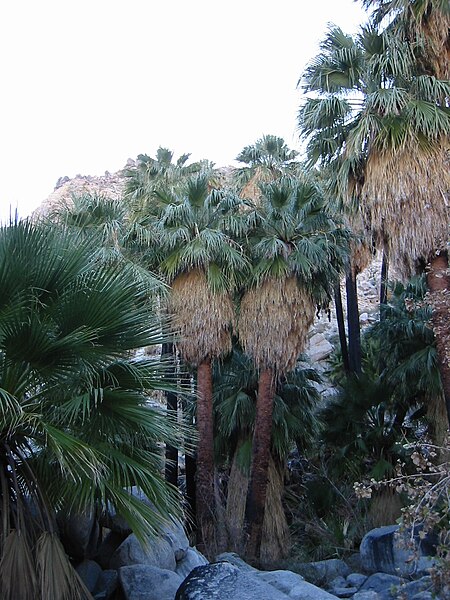
Contrary to popular belief, no palm tree is native to the Los Angeles area.  They are all interlopers. The only palm tree native to California is the California Fan Palm (Washingtonia filifera), which grows in the oasis canyons of the low deserts of Palm Springs, Borrego, and Coachella.

They are easy to recognize with the fan palm shaped leaves and thick trunks.


For me...they mostly just get in the way.

Darryl
Copyright 2012 - Darryl Musick
All Rights Reserved

The Arctic Orchid...Bletilla


With my recent posts about phalaenopsis...or butterfly...orchids, which are not easy orchids to grow for beginners, people have been asking me what orchids they can grow.

To start, especially if you live in a colder climate than me (Southern California), I'd recommend something like you see on this page...the bletilla orchid.


It's a terrestrial orchid, meaning it grows in soil, not on the side of a tree. It works wonderfully in moist to soggy ground. Think of that faucet you have in the back yard that always spills a couple of drops. That's where I planted mine and I never had to do anything to it...it self watered, was next to the warm house, and built itself into a very thick, big, blooming clump.


It's hardy to 25 degrees. Lower if you cover the deciduous bulbs with mulch after the leaves have fallen off. If you have them planted in the ground, right next to the house, and you live in the lower 48, the heat from the house would probably be enough.

Shade lovers, they do quite well in the ground on the north wall of our house.


Got a moist patch of dirt on on the north, west, or east side of your house...fairly shady? This can go there and you're off to the races in the world of orchid growing. Just bury the bulbs about 2" deep, water in, and watch for results in the spring.

Available at many garden centers for a dollar a bulb, it's also a very cheap way to get into the hobby.

Darryl
Copyright 2012 - Darryl Musick
All Rights Reserved

In Praise of Multitaskers - The Garlic Chive

My motto is that it has to provide beauty or nourishment to be in my garden. Once in awhile, you have plants that do both. Now here's one that adds a third category...pest control.

As you can see above, the plant has very show clumps of flowers, almost  like little bursts of fireworks.  It grows readily from seed and without a lot of help from the gardener.


It grows in clumps and will invaribably spread around your garden. 

The plant is pretty much completely edible. Use the flowers as a spice for Asian broths. Cut the long, thin leaves into bits and sprinkle on your food for a garlic flavor. I like to put them in my eggs. 


You can cut the leaves as much as you want without hurting the plant.  You have to uproot it to kill it.


Planted around roses, garlic chives help to keep the aphids off of the roses. I think this is because the aphids are attracted to the chives more than the roses but it's a great, green method of pest control for your roses.

The one drawback is its readiness to grow.  It will quickly spread all over your garden. The pictures here show a planting that came up spontaneously...not from my original planting about 20 feet away. They don't compete with other plants and play nicely with them but they can get to be a bit weedy.

It's easy to control by just grabbing a clump of leaves and uprooting it where you don't want it.

A nice addition to your herb garden. Between this and our basil, it's hard to say which one is used more.  Available by seed at most garden centers, hardware stores, and in the produce department at Asian supermarkets.

Darryl
Copyright 2012 - Darryl Musick
All Rights Reserved

DINNER TIME! Dutch Oven Beef Stew

It can still get a little chilly at night here in Northern California. A hearty stew is just the thing to take the chill off. This reci...